





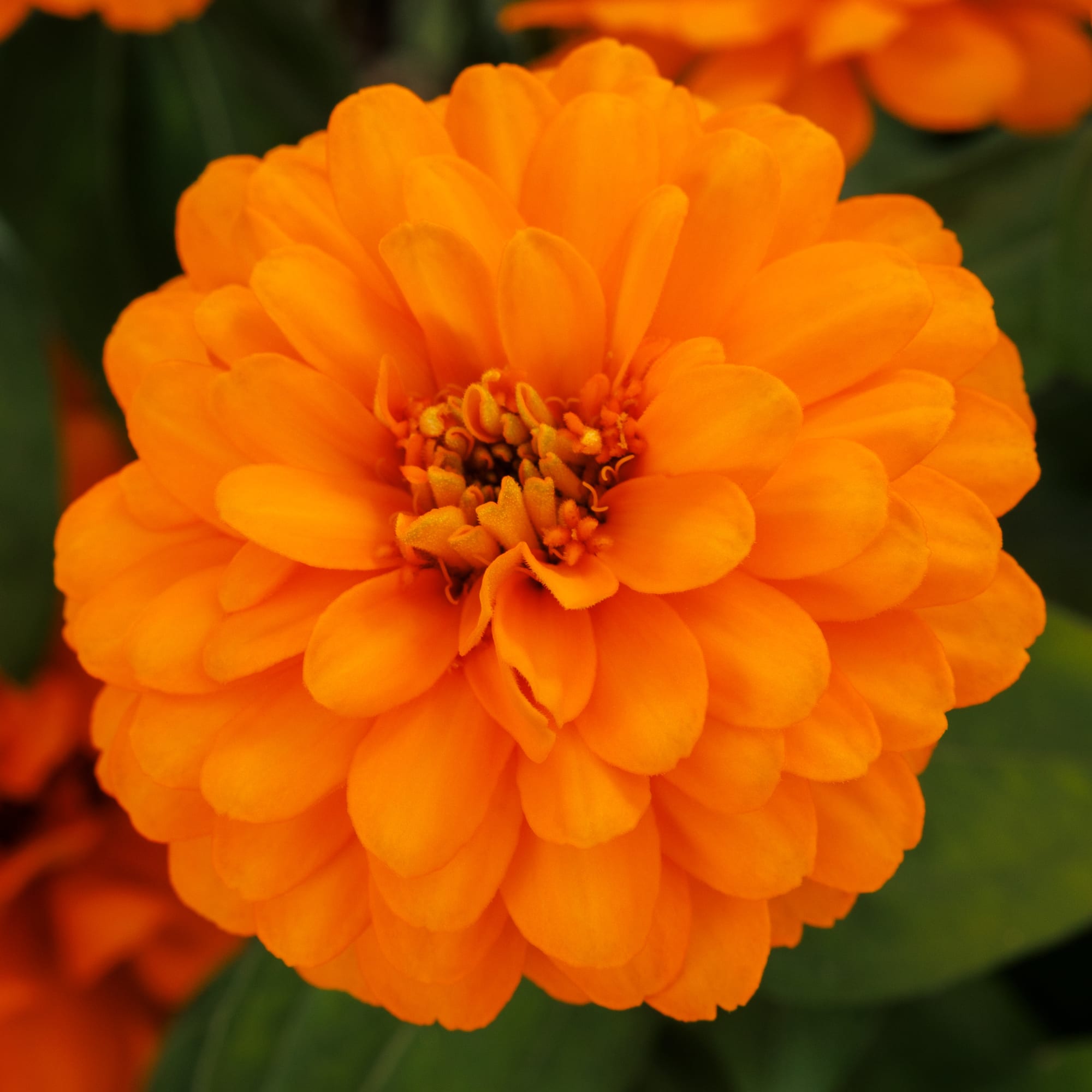


Description
Let the good times bloom!
- 25% larger flowers than competitors.
- Fully-double flowers increase flower longevity for lasting impact.
- Excellent heat, drought and disease tolerance brings season-long garden performance where other zinnias fail.
- Vigorously branched plants are adaptable to production in packs as well as premium pots and baskets.
Features

Growing information
Culture Information
Zydeco™
Zinnia
Zinnia marylandica
Product form: Seed
Containers: Large Packs, Pints, Quarts, Gallons, Hanging Baskets
Habit: Bushy, Mounding, Upright
Garden Specifications
Garden height: 14–20" (35–50 cm) tall
Garden width: 14–20" (35–50 cm) wide
Exposure: Full Sun
USDA zone: 10
AHS zone: 12–1
Product use: Packs, Containers, Hanging Baskets, Landscapes, Patio Pots, Combos
Germination
Germination time: 1 day
Media temperature: 70–75 °F (21–24 °C)
Chamber: No
Light: Not required for germination
Seed cover: Yes
Seeds per cell: 1
Moisture level: 5 - SATURATED: Soil is dark brown and shiny, free water is present at the surface of the soil, water drips freely from the bottom of the tray, and trays are heavy with a visible bend in the middle.
Recommended tray size: 288-cell tray
Young Plant Production
Temperature Day: 72–74 °F (22–23 °C)
Temperature Night: 66–68 °F (19–20 °C)
Average daily temperature: 71 °F (22 °C)
Day extension lighting: Not necessary
Light intensity: 600–700 µmol m−2.s−1
Day length response: Facultative short day
Daily light integral (DLI): 12–14 mol m−2.d−1
Media pH: 5.5–5.9
Media EC: SME 0.5 to 0.75 mS/cm, Press/Squeeze Method EC: 0.75-1.1 mS/cm
Fertilizer: 50–75 ppm N
Moisture level: Media should be allowed to dry between irrigations. Alternate between moisture level 2 and 4. 2 - MEDIUM: Soil is light brown in color, no water can be extracted form soil, and soil will crumble apart. 4 - WET: Soil is dark brown but not shiny, no free water is seen at the surface of the soil, when pressed or squeezed water drips easily, and trays are heavy with a visible bend in the middle.
Pinching: No
Plant growth regulators (PGRs): Spray with B-Nine® WSG at 1,250 to 2,500 ppm when the cotyledons have expanded and the first true leaf is starting to show.
Plug grow time: 2–3 weeks in a 288-cell tray
Tech tip: Transplant zinnias on time. Stress in the plug can lead to premature flowering.
Finishing
Temperature Day: 74–76 °F (23–24 °C)
Temperature Night: 62–64 °F (17–18 °C)
Average daily temperature: 69 °F (20 °C)
Day extension lighting: Beneficial to 14 hours
Light intensity: 800–1,200 µmol m−2.s−1
Day length response: Facultative short day
Daily light integral (DLI): 14–16 mol m−2.d−1
Transplanting: Transplant directly into the finished container. Place the rooting media slightly below the level of media in the container. Make sure that the root ball is covered and that the plug is situated in the center of the pot.
Media pH: 5.5–5.9
Media EC: SME EC: 0.9–1.3 mS/cm, PourThru EC: 1.4–2.0 mS/cm
Fertilizer: 200–250 ppm N
Pinching: No. Pinching is not recommended or needed.
Plant growth regulators (PGRs): Spray with B-Nine® WSG at 2,500–5,000 ppm one to three times depending on container size and environmental conditions. Start PGR applications about 10–14 days after transplant. To prevent late flower stem stretch, drench with Bonzi® at 0.5 to 1 ppm when flowers start to show color.
Tech tip: Extending the day length during short days to 14 hours will help ensure the first flowers will be fully double. Do not overwater— zinnias are susceptible to root rot diseases. Growing at lower than recommended temperatures can also lead to root disease issues. Proper air circulation will help reduce the likelihood of powdery mildew infections.
Moisture level: Media should be allowed to dry between irrigations. Alternate between moisture level 2 and 4. 2 - MEDIUM: Soil is light brown in color, no water can be extracted from soil, and soil will crumble apart. 4 - WET: Soil is dark brown but not shiny, no free water is seen at the surface of the soil, when pressed or squeezed water drips easily, and trays are heavy with a visible bend in the middle.
Common pests: Aphids, whiteflies, thrips
Common diseases: Powdery mildew, Botrytis, bacterial leaf spot, Alternaria
Scheduling
| Size | Crop Time | Plants Per Pot |
|---|---|---|
| Large Packs | 6–7 weeks | 1 ppp |
| 1.0 pint (4 inch) | 7–8 weeks | 1 ppp |
| 1.0 quart (4.5 to 5 inch) | 7–8 weeks | 1 ppp |
| 1.25 to 2.5 quart (5.5 to 6.5 inch, trade gallon) | 7–8 weeks | 1–2 ppp |
| 3.0 quart to 2.0 gallon (7.5 to 10 inch) | 7–8 weeks | 3–4 ppp |
| 1.5 gallon hanging basket (10 inch basket) | 7–8 weeks | 3–4 ppp |
Estimated finish crop time is from transplant of a 288-cell tray and finished at an average daily temperature (ADT) of 69 °F (20 °C).
Example crop schedule for a 1.25 quart
| Weeks From Transplant | Description |
|---|---|
| 2 weeks | Spray with B-Nine® WSG at 2,500–5,000 ppm |
| 4 weeks | If needed, spray with B-Nine® WSG at 2,500–5,000 ppm |
| 6 weeks | If needed, spray with B-Nine® WSG at 2,500–5,000 ppm |
| 8 weeks | Drench with Bonzi® at 0.5–1 ppm to prevent late flower stem stretch; finish. |
Frequently asked questions
You can buy Syngenta Flowers' products through authorized distributors and brokers. Visit the Distributors section of our website to find a supplier near you.
No, Syngenta Flowers does not sell directly to consumers or growers. Our products are available through authorized distributors and brokers. Please refer to our Where to Buy page for more information.
You can stay informed by visiting the News section on our website, which features updates on new products, partnerships, and industry recognitions. You can also, sign up for our e-mail newsletters for the latest insights on new varieties, tech tips, and more!
Yes, we offer a Technical Document Library with culture guides, sell sheets, white papers, technical articles, and videos to support growers. We have a Grower Success Guide that serves as a fast and easy reference tool for all Annuals and perennials. And if you still need help, contact your broker rep directly, and they will resolve or direct you to the correct contact.
Grower Success Guide
Look for our flowers in garden centers across the country. Many of our seeds are available to consumers from seed packet companies online.
Growers, retailers, agencies, and brokers - can access images through the Trinity Image Library. The library link is conveniently located in the footer of every page.
Yes, during transport, plants experience a lot of stress and when plants are stressed they can release ethylene. Higher temperatures, enclosed spaces, and damage to the plants increase the ethylene concentrations in the shipping environment.
Resources
Protect your Ethylene-Sensitive Crops
All our product catalogs are available digitally on our website's catalog page. While we maintain limited printed versions, we primarily offer digital catalogs to support environmental sustainability.
For the most current product information, we recommend checking our website directly as product details may change more frequently than catalog updates.
You can find our videos across multiple platforms:
- YouTube: Subscribe to our Syngenta Flowers channel for growing tips, product showcases, and educational content
- Instagram: Follow us for quick video updates and stories
- LinkedIn: Connect with us for professional insights and industry news
- Document Library: Access our technical videos and product demonstrations
For the most comprehensive video collection, visit our YouTube channel.