



2027 Spring Seed Annuals Programming

Grow with Syngenta Flowers’ stunning seed crops for spring sales
Planning your spring line-up? Seed crops offer flexibility in programming, relying on fresh, high-quality seed that has been sown by reputable plug growers or by you, the finished grower. Syngenta Flowers has put together spring programming for several of our most common genera, Pentas (Beehive™ and BeeBright™), Celosia (Bright Sparks™), Coleus (Mesmerize™), Gerbera (Jaguar™), Zinnia (Zydeco™), Marigold (Endurance™), Pansy/Viola (Delta™ Pro and Penny™™ Pro), Petunias (FlashForward™/FotoFinish™) and Vinca (Blockbuster™/Cora® XDR). Adopting these programs and technical tips will deliver smooth sailing in production that deliver profitable outcomes.
Beehive™ and BeeBright™
Syngenta Flowers offers a dynamic duo of pollinator-attracting options with the BeeBright and Beehive Pentas series, catering to both upright and cascading design needs. BeeBright delivers a highly uniform, compact habit with a tight flowering window, making it ideal for high-density pot production and tidy landscape borders. In contrast, Beehive breaks new ground as the first spreading Pentas series from seed, featuring excellent basal branching and an airy, cascading nature that quickly fills hanging baskets with mounds of vibrant color. Both series exhibit outstanding tolerance to intense summer heat and humidity, but Beehive offers growers a distinct production advantage by flowering two weeks earlier than competitor varieties with nearly 10% more vigor, resulting in fuller, faster-finishing premium containers.
Pictured Right: Beehive™ Lilac and BeeBright™ Red

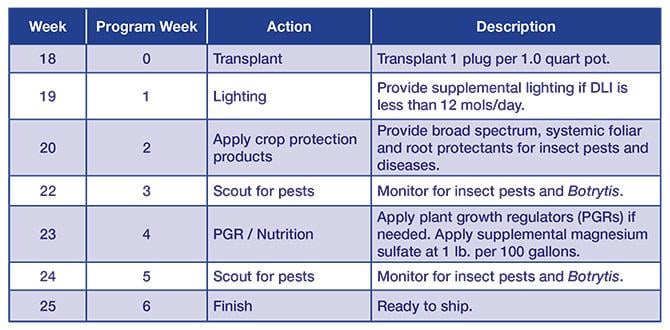
BeeBright™ Pentas 1.0 Quart (4.5-inch) Program; Week 25 Sales Target
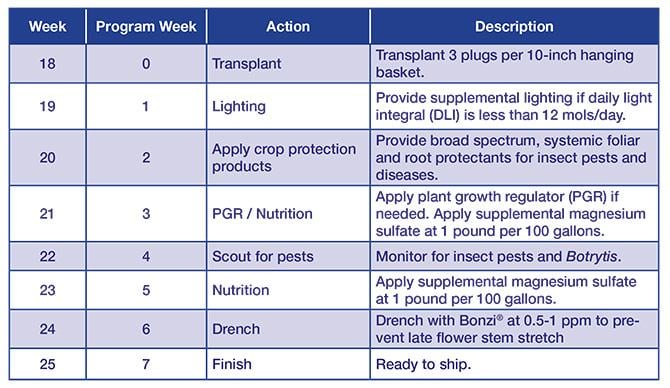
Beehive™ Pentas 1.5 Gal. (10-inch) Hanging Basket Program; Week 25 Sales Target
TECH TIPS
- Maintain pH above 6.1 to prevent iron toxicity symptoms.
- Provide supplemental lighting when DLI is below 12 mols/day; a 14-hour day length is beneficial.
- Apply magnesium sulfate at 1 lb/100 gallons every 3 weeks to maintain healthy, green color.
- PGRs are typically not required, but B-Nine® WSG (2,500-5,000 ppm) or Bonzi® (5-10 ppm) can be used if needed.
Additional Resources
Bright Sparks™
The Bright Sparks™ Celosia series sets a new standard for heat-loving annuals with its exceptionally large, feathery plumes and ultra-bright colors. Engineered for superior branching, Bright Sparks produces a dense, mounded plant covered in multiple showy flower heads that resist fading even under intense summer sun and drought conditions. Its compact, uniform habit makes it highly efficient for growers to produce in premium packs and pots, while its robust garden performance ensures continuous, low-maintenance color for landscapes and mixed containers throughout the hottest months of the year.
Pictured Right: Bright Sparks™ Red Bronze Leaf, Bright Sparks™ Pink and Bright Sparks™ Yellow

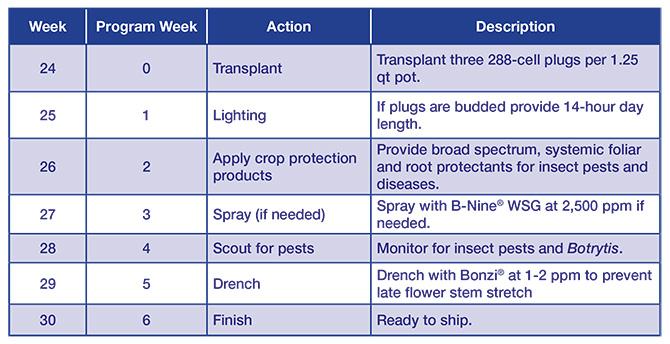
Bright Sparks™ Celosia 1.25 qt (6-inch) Program; Week 30 Sales Target
TECH TIPS
- Bright Sparks™ varieties are facultative short-day; provide 14-hour days during plug production under short-day conditions to prevent premature flowering.
- For budded plugs, provide 14-hour days for 4 weeks and maintain moist media to promote bulking and prevent premature flowering.
- B-Nine® WSG (2,500 ppm) can be used for height control; do not apply after buds show color.
Additional Resources
Mezmerize™
Syngenta Flowers’ Mezmerize™ Coleus series brings vibrant, high-impact foliage to both sun and shade gardens with unmatched ease of production. Known for its excellent natural branching and dense, mounded habit, Mezmerize fills containers quickly with rich, multi-colored leaves without requiring heavy PGR applications. This series boasts exceptional heat and humidity tolerance, thriving in the intense mid-summer sun where other varieties might fade, scorch, or bolt. Because it is highly resistant to premature flowering, Mezmerize maintains its tidy, colorful appearance longer into the season, making it a reliable, low-maintenance choice for premium mixed containers and landscape beds.
Pictured Right: Mezmerize™ Chocolate Rose and Mezmerize™ Green Lime

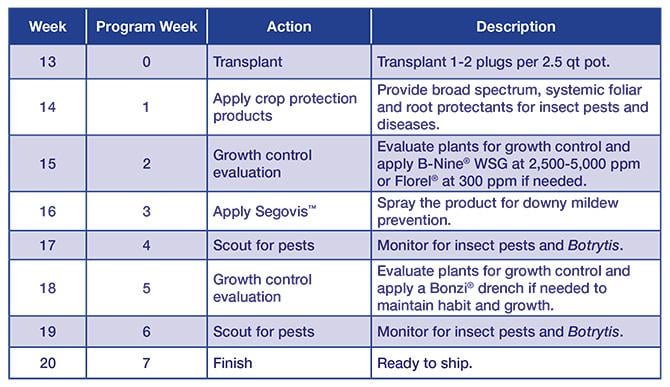
Mezmerize™ Coleus 2.5 quart (6.5-inch) Program; Week 20 Sales Target
TECH TIPS
- Use primarily Cal-Mag® Plus fertilizers during propagation; high salt and high ammonium levels can contribute to unwanted stretch.
- Long days (14+ hours) improve plant build and foliage quality.
- Avoid low light and warm temperatures, which can promote stretching.
- PGRs are rarely needed, but Chocolate Lime and Lime Green may benefit from applications of B-Nine® WSG, Florel®, or Bonzi®.
Additional Resources
Jaguar™
The Jaguar™ Gerbera series is the industry standard for high-density, early-season pot Gerbera production. Engineered for maximum bench efficiency, Jaguar features a highly uniform, compact plant habit with short, thick flower stems that resist stretching. This allows growers to produce more plants per square foot while enjoying a concentrated flowering window. With its exceptional flower count, rich color palette, and outstanding retail shelf life, Jaguar delivers a massive burst of bright, cheerful color in 4-inch (10 cm) pots, making it a favorite for quick-turn spring programs and high-volume retail displays.
Pictured Right: Jaguar™ Fire Mix

Jaguar™ Gerbera 1.0 quart (4.5-inch) Program; Week 16 Sales Target
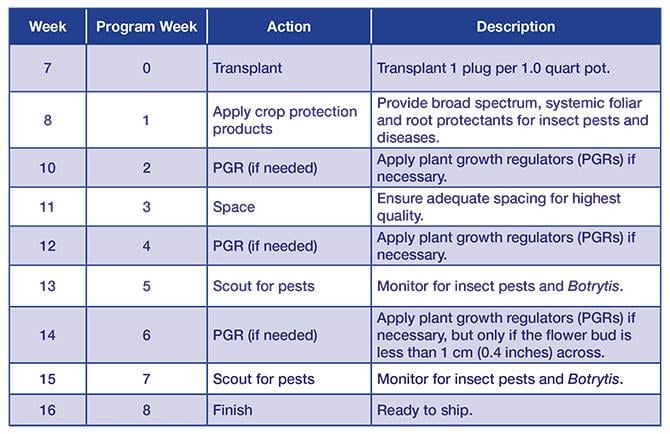
TECH TIPS
- Keep crowns above the media surface to prevent distorted growth and crown rot.
- Allow adequate dry-back between irrigations and avoid night misting.
- Provide supplemental HID lighting under low-light conditions, but do not extend day length.
- PGRs only if needed: B-Nine® WSG at 2,500-5,000 ppm or A-Rest® at 1-3 ppm; avoid applications after 1 cm (pea-size) buds.
Additional Resources
Zydeco™
Syngenta Flowers’ Zydeco Zinnia series represents a breakthrough in disease resistance and garden performance, proudly anchored by Zydeco Fire, an esteemed All-America Selections (AAS) Winner. Featuring massive, fully double blooms on well-branched, bushy plants, the Zydeco series delivers outstanding heat and drought tolerance that keeps landscapes vibrant all summer long. Its superior resistance to powdery mildew and Alternaria leaf spot ensures clean foliage and reduced chemical inputs for growers, while providing consumers with a low-maintenance, high-impact show of color. With its robust habit, eye-catching flower size, and award-winning genetics, Zydeco is the ultimate choice for premium pots, mixed containers, and landscape beds.
Pictured Right: Zydeco™ Mix

Zydeco™ Zinnia 1.25 qt (6-inch) Program; Week 30 Sales Target
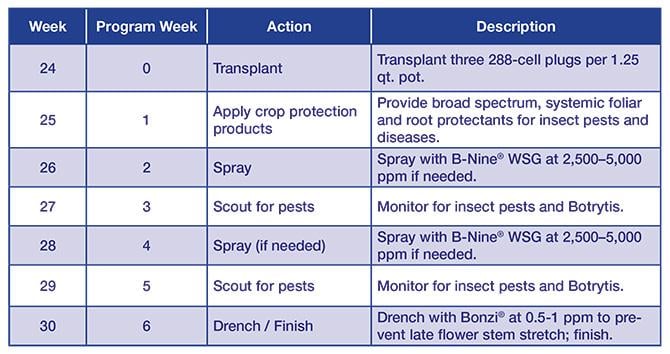
TECH TIPS
- Extending the day length during short days to 14 hours will help ensure the first flowers will be fully double.
- Do not overwater— zinnias are susceptible to root rot diseases.
- Growing at lower than recommended temperatures can also lead to root disease issues.
- Proper air circulation will help reduce the likelihood of foliage fungal infections.
Additional Resources
Endurance™
The cornerstone of the Syngenta Flowers marigold portfolio is the revolutionary Endurance™ series. As a premier triploid hybrid combining the best of African and French marigold genetics, Endurance delivers relentless garden performance with massive, continuous blooms. Because these plants are sterile, they do not waste energy setting seed, allowing them to thrive and remain covered in vibrant color even through the extreme heat of mid-summer. For growers and consumers alike, Endurance represents the ultimate in low-maintenance durability, outstanding bench run efficiency, and season-long stamina.
Pictured Right: Endurance™ Orange in Landscape

Endurance™ Marigold 1.25 qt (6-inch) Program; Week 30 Sales Target
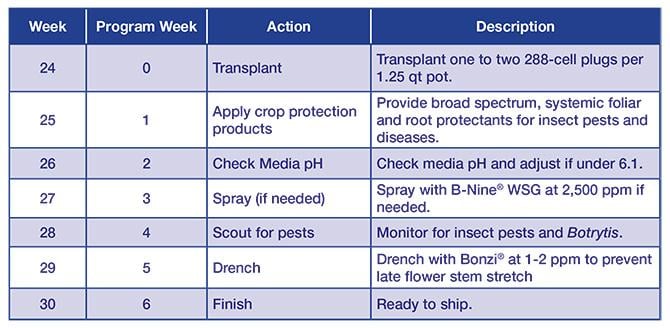
TECH TIPS
- Maintain media pH above 6.1 to help prevent iron and manganese toxicity.
- Plant stretched plugs deep (up to the cotyledons) at transplant to improve stability and reduce floppiness.
- PGRs are usually not required, but B-Nine® WSG at 2,500-5,000 ppm can be applied before buds reach pea size under low light or high temperature/humidity conditions.
Additional Resources
Penny™ Pro and Delta™ Pro
Delta™ Pro pansies are bred for precision by bringing the highest levels of programmability and uniformity to a multi-season pansy. Delta™ Pro deliver early and extremely uniform flowering, within varieties and across the series, taking the guesswork out of planning and production for spring. These compact and heavily branched plants fill pots quickly, yet require limited PGR usage, and can all be grown with the same protocol. Delta Pro are ideal for high-density finishing offering short, non-stretching, flower stems that hold large flowers upward, providing long-lasting and impactful retail displays. This series offers all the core colors plus the most important novelties in one super uniform series
Penny™ Pro violas are bred for a high level of uniformity across the entire series, ensuring a consistent and cohesive display at the right time. Growers appreciate its high programmability, making viola production efficient and profitable. Penny™ Pro deliver tightly branched plant canopies with a non-stretching habit, reducing the need for PGRs.
Pictured Right: Penny™ Pro Yellow and Delta™ Pro Clear Orange

Target: Week 12 - Pansy/Viola: Delta™ Pro Quarts
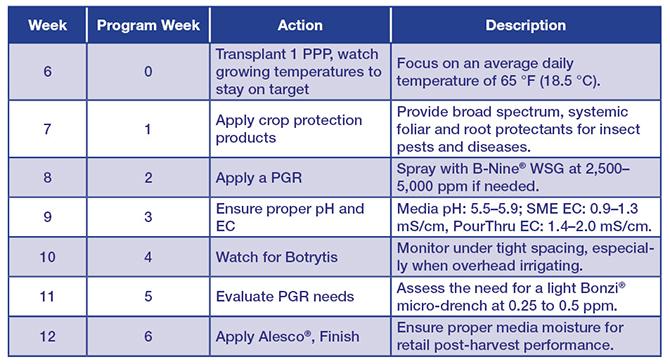
Target: Week 12 - Penny™ Pro Viola – 306 Jumbo Packs

TECH TIPS
- Keep media pH below 5.8 to help avoid Thielaviopsis (black root rot) infections.
- Malformed and puckered leaves indicate calcium or boron deficiencies. To prevent this, fertilize with plug special (13–2–13) or a Cal-Mag® Plus fertilizer (14–4–14). Boron deficiencies can be distinguished by tip abortion, upper leaf stunting, puckering and thickening of leaves, along with shortened internodes and/or a gnarled mass of lateral shoots. A borax or Solubor® drench will help overcome these problems. Increase airflow to help prevent calcium or boron deficiencies.
- Use Alesco® as a post-harvest tool. Chrysal Alesco® protects ethylene sensitive crops like pansy and viola during shipping and at retail. The product is applied as a foliar spray 1 to 2 days before shipping to protect plants from postharvest damage caused by external sources of ethylene and transport stress. Alesco® improves retail plant quality resulting in greater sell-through and less shrink.
Be sure to submit your seed orders for 2027 or submit your plug programs soon, and be sure to check out our Delta Pro pansy and Penny Pro viola landing pages.
Flashforward™ and FotoFinish™
FlashForward™ petunias play well alone and with others. This miniature flowering, spreading petunia is perfectly suited for basket, mixed container, and premium pack programs. Its benefits include:
- Tidy plants hold longer at retail than traditional trailing petunias and don’t overgrow companions in mixed containers.
- Extremely free flowering all summer long even under difficult garden and weather conditions.
FotoFinish™ petunias are a uniform spreading petunia series with well-matched plant habits and flower timing. Their extra early flowering provide programmable finishing in 9-10 weeks from sowing. Plus their mounded and branching habit is ideal for high density growing, and holds better at retail and provides faster garden fill due to the need for fewer PGRs in production. FotoFinish™ is free flowering with masses of color all over the plant for high-impact retail and long-lasting garden displays.
Pictured Right: FotoFinish™ Pink and FlashForward™ Pink Glo

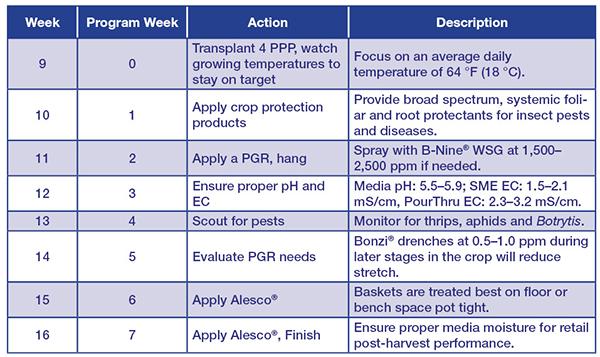
Target Week 16 - FlashForward™ Petunia 1.5 gal (10-inch) hanging baskets
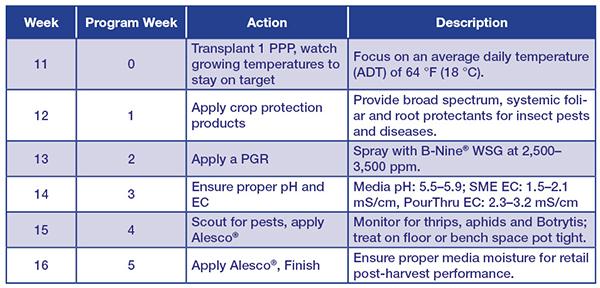
Target Week 16 - FotoFinish™ Petunia 6-inch tray (6 count)
TECH TIPS
- Providing cool temperatures, high light and ‘growing on the dry side’ will help keep FlashForward™ and FotoFinish™ be more compact.
- Growth management with early morning DIF treatments helps.
- Providing long day lighting during short days will hasten time to flower.
Be sure to submit your seed orders for 2027 or submit your plug programs soon, and be sure to check out our FlashForward and FotoFinish petunia landing pages:
Additional Resources
Blockbuster™ and Cora® XDR
Blockbuster™ vinca packs a punch for pack, pot and hanging basket production. This F1 Series is well-branched with improved earliness and extra-large flowers that maintain their perfect form, even in the most extreme conditions. Blockbuster™ vinca have bold color intensity like the four new novelty Crush colors, and outstanding red, white and blue varieties for patriotic mixes. Their floriferous plant structure provides superior impact at retail and provides enduring flower-power in the landscape.
Cora® XDR is the flower with the power! With its extreme disease resistance (screened against 36 contemporary strains of Aerial phytophthora, including ten of the most virulent that cause phytophthora blight on annual vinca), Cora® XDR provides season-long flowering for landscape plantings. These isolates were confirmed in collaboration with Clemson University and found at growers and in landscapes across the southern U.S. The excellent branching, uniformity, and flower quality make Cora® XDR the ideal choice from premium packs and small pots to large containers. Based on our technical trial data all colors (widest range of solid and bicolor patterns) time similarly when compared to any disease-resistant vinca series on the market.
Pictured Right: Blockbuster™ Papaya and Cora® XDR Red Glow

Target: Week 20 - Vinca: Blockbuster™ 1.5 gal (10-inch) Hanging Baskets
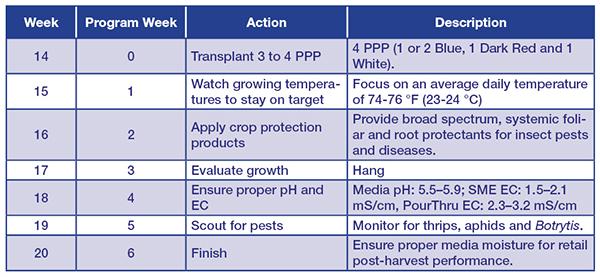
Target: Week 20 - Vinca: Cora® XDR Quarts

TECH TIPS
- Start with a disinfected growing area and keep media pH below 5.8 to help avoid Thielaviopsis infections.
- Cora® XDR vinca has a high resistance to Phytophthora nicotianae; however, they are not immune to the disease. For this reason, we highly recommend chemical rotations as part of a responsible and critical disease resistance maintenance program. Apply fungicides to control several other diseases that can infect vinca, such as Thielaviopsis, Rhizopus, Rhizoctonia, Pythium and Tospovirus (INSV and TSWV).
- Vinca needs high light and warm temperatures. Provide light at 14-16 mols.m-2.d-1 and ADT of 74-76 °F (23-24 °C). Do not try to finish vinca too early in the Spring season to avoid cold temperatures.
- PGRs on vinca are mostly used in pack production. Never apply Bonzi® to vinca as leaf spotting will occur. Use sprays of B-Nine® WSG at 2,500–5,000 ppm or A-Rest® at 2–4 ppm are recommended, if needed.
Be sure to submit your seed orders for 2027 or submit your plug programs soon, and be sure to check out our Blockbuster and Cora XDR vinca landing pages.